 Skip to content


10 Historical and Cultural Sites You Must Experience in Batroun, Lebanon
Batroun is one of the oldest continuously inhabited coastal towns in Lebanon and a destination where history, culture, and everyday Mediterranean life blend seamlessly. Located about 50–55 km north of Beirut, this charming town offers visitors a compact yet remarkably rich collection of historical and cultural sites. Phoenician remains, classical traces, elegant churches, a traditional souk, a working harbor, and modern cultural projects sit side by side within an easily walkable historic center.
Whether you are visiting for a few hours or a full day, Batroun rewards those who take the time to explore its layered past. Below is a detailed guide to the 10 historical and cultural experiences you should not miss.
Quick Overview
- Location: Batroun, North Governorate, Lebanon
- Distance from Beirut: Approximately 50–55 km (1–1.5 hours by car)
- Focus: Historical monuments, religious architecture, traditional urban fabric, and cultural heritage
- Best for: History enthusiasts, cultural travelers, photographers, and anyone seeking an authentic Lebanese coastal town experience
- Character: Intimate, atmospheric, and rich in continuous layers of history
1. Phoenician Sea Wall
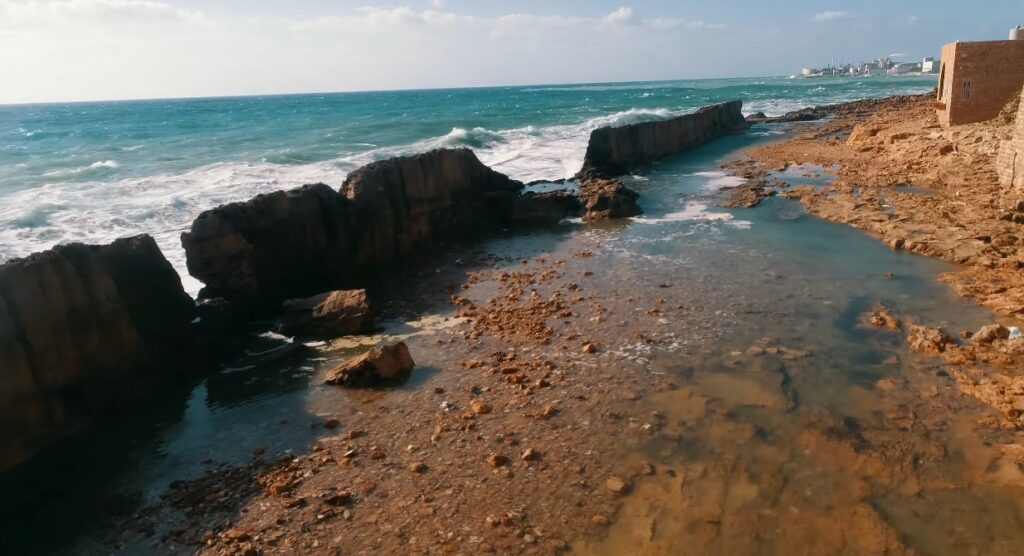
The Phoenician Sea Wall is Batroun’s most famous and visually striking ancient landmark. Stretching approximately 220–225 meters along the shoreline, this massive sandstone structure was created by cutting into the natural coastal rock. It served as a protective barrier against waves and storms while also resulting from ancient quarrying activity.
Walking alongside the wall with the open Mediterranean on one side and the historic town on the other is one of the most memorable experiences in northern Lebanon. The interplay of light on the stone, the sound of the waves, and the sense of standing beside a structure that has endured for centuries create a powerful atmosphere. Sunset is particularly recommended, when the golden light enhances both the wall and the sea views.
2. Batroun Old Souk
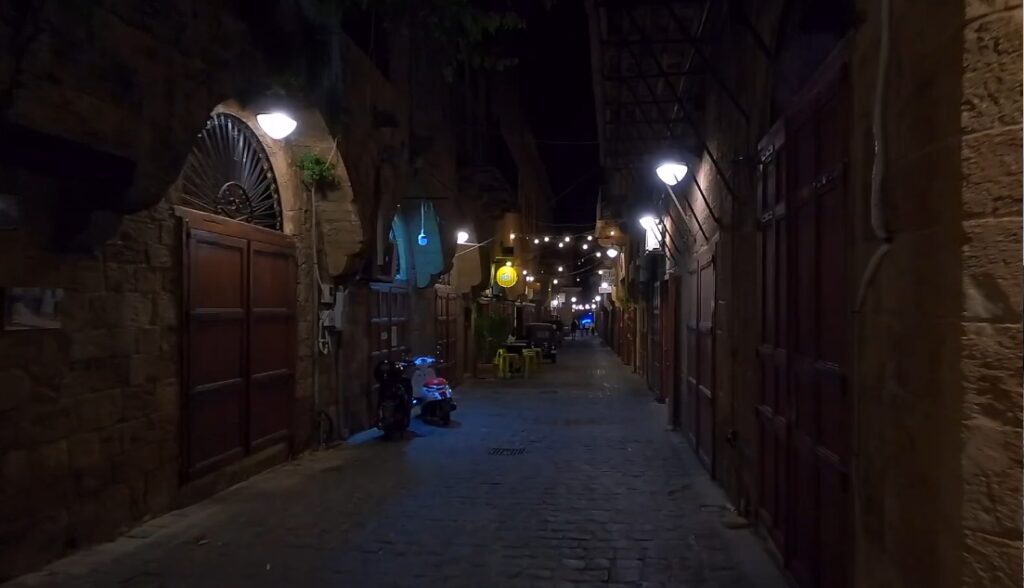
The Old Souk forms the commercial and social heart of historic Batroun. This network of narrow cobbled lanes, sandstone vaults, arched passages, and traditional buildings retains a strong sense of the past while remaining a living marketplace. Small shops sell local products, spices, sweets, handicrafts, and everyday goods, while cafés and eateries invite visitors to pause and observe daily life.
Unlike larger or more heavily commercialized souks, Batroun’s market feels intimate and authentic. Wandering its lanes is one of the best ways to absorb the town’s character and connect with its ongoing traditions.
3. St. Stephen’s Cathedral (Mar Estephan)
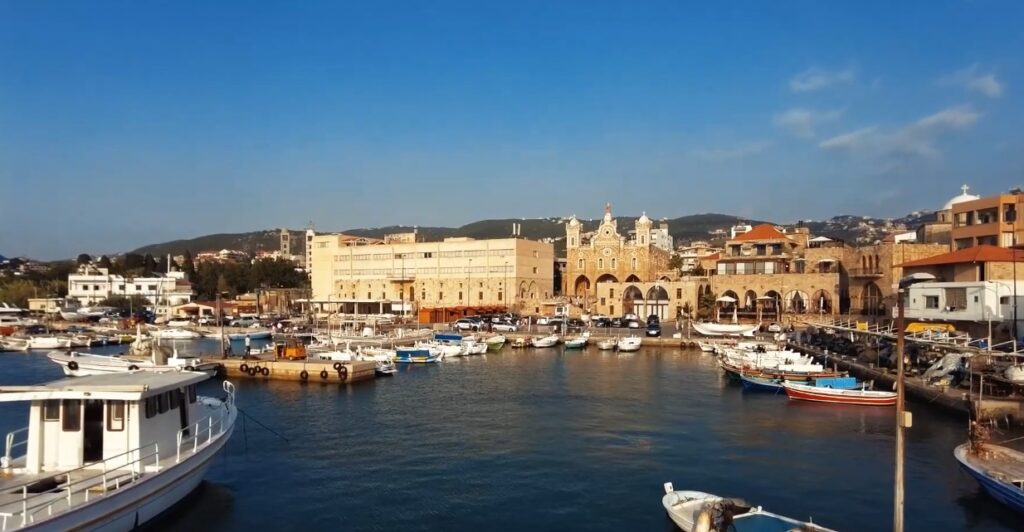
St. Stephen’s Cathedral is the principal Maronite church of Batroun and one of the most prominent architectural landmarks in the town. Completed in 1910 on the site of an earlier church, it was designed by the Italian architect Giuseppe Maggiore and constructed primarily from local Batroun sandstone.
The cathedral combines neo-Byzantine, Romanesque, and Gothic influences. Its western façade overlooks the fishing harbor and features distinctive domes and a statue of St. Stephen. Inside, visitors can admire the basilical layout, notable marble columns (some said to originate from an ancient temple), three altars, and a painting of St. Stephen. The building serves both as an active place of worship and as an impressive example of early 20th-century religious architecture in Lebanon.
4. Church of Our Lady of the Sea (Saydet el-Bahr)
This small Greek Orthodox chapel occupies one of the most picturesque locations in Batroun, standing almost at the water’s edge and overlooking the Phoenician Sea Wall. Built of local sandstone with a simple barrel-vaulted interior, the church is believed to stand on earlier Byzantine remains and dates in its present form largely to the 19th century.
The chapel is known for its historic icons, including works associated with the 1860s, and for the icon of Our Lady of the Sea, which many regard as miraculous. A charming terrace with arched openings frames beautiful views of the sea and the ancient wall below. The combination of spiritual calm, modest architecture, and outstanding setting makes this one of the most atmospheric stops in town.

5. Lebanese Diaspora Village
The Lebanese Diaspora Village is a distinctive cultural project located in the historic center of Batroun. Initiated by Lebanese Diaspora Energy, it was created as a hub connecting the global Lebanese community with their homeland. The site features restored traditional stone houses representing different diaspora communities, an outdoor square for events, a café, a gift shop, and the Asherah Guest House.
More than a simple tourist attraction, the village functions as a living space for cultural exchange, storytelling, hospitality, and community gatherings. It adds a meaningful contemporary layer to Batroun’s historical landscape and offers visitors insight into the enduring ties between Lebanon and its worldwide diaspora.

6. The Historic Fishing Harbor
Batroun’s old fishing harbor remains a working port as well as a scenic and cultural landmark. Colorful fishing boats, the daily routines of local fishermen, and the backdrop of historic buildings and the sea wall create a classic Mediterranean coastal scene that has changed little in its essential character over generations.
Spending time by the harbor allows visitors to observe a living tradition that links the town’s ancient maritime past with the present. It is an ideal place for photography, quiet observation, and understanding Batroun as a genuine coastal community rather than solely a historic site.

7. St. George’s Church
St. George’s Church is an important 19th-century Greek Orthodox church in the old town. Known for its elegant design and carefully maintained interior, including a notable iconostasis, it contributes significantly to Batroun’s rich collection of religious architecture. Together with St. Stephen’s Cathedral and the Church of Our Lady of the Sea, it illustrates the diversity and continuity of Christian heritage in the town.
8. Remains of the Roman Theatre
Batroun preserves the remains of an unfinished Roman theatre carved into the rock. Although less dramatic than larger and more complete Roman theatres elsewhere in the region, these remains provide tangible evidence of the town’s classical past and its place within the broader Roman world of the eastern Mediterranean. They add another chronological layer to the visitor’s understanding of Batroun’s long history.
9. Traditional Sandstone Architecture of the Old Town
Beyond individual monuments, the historic urban fabric of Batroun itself is a major cultural attraction. The characteristic golden Batroun sandstone appears in houses, vaults, arches, and public buildings throughout the old center. Narrow streets, traditional spatial arrangements, and the overall scale of the historic quarter create a cohesive and atmospheric environment.
Simply walking through these streets, noticing architectural details, and experiencing the interplay of light and stone is one of the most rewarding ways to engage with the town’s heritage.
10. Experiencing Batroun’s Continuous Historical Layers
What ultimately distinguishes Batroun is the sense of uninterrupted human presence across millennia. Phoenician origins, classical and Byzantine remains, later medieval and Ottoman influences, 19th- and early 20th-century churches, and contemporary cultural projects all coexist within a small geographic area. Moving between the sea wall, the souk, the churches, the harbor, and the Diaspora Village allows visitors to experience this continuity in a direct and memorable way.
This layered historical experience—rather than any single monument—forms the deepest cultural attraction of Batroun.
Practical Information
Nearly all the sites listed above are concentrated in the compact historic center and waterfront zone. They can be explored comfortably on foot. Most outdoor sites and public spaces are free to access. Churches are generally open to respectful visitors outside of service times. Modest dress is recommended when entering religious buildings. Comfortable walking shoes are advised because of cobblestones and uneven surfaces near the sea wall.
Best Time to Visit and Tips
Spring and autumn provide the most pleasant temperatures for walking. Late afternoon and sunset offer the best light for the Phoenician Sea Wall and waterfront views. Summer evenings are lively, while winter visits can feel quieter and more atmospheric.
Tips for a rewarding visit:
- Follow a natural walking circuit linking the sea wall, harbor, Old Souk, main churches, and Diaspora Village.
- Allow extra time for cafés and people-watching in the souk.
- Visit churches respectfully and check locally for any service times.
- Bring a camera—the combination of stone, sea, and historic streets is highly photogenic.
- Consider combining the historical sites with a meal of local seafood or a fresh Batroun lemonade.
How to Get There
Batroun is easily reached from Beirut via the coastal highway (approximately 1–1.5 hours depending on traffic). Private car, taxi, or intercity buses all provide convenient access. Once in town, the historic center is best explored entirely on foot.
Nearby Attractions
The wider Batroun area also offers beaches, the Mseilha Fort, scenic mountain villages, and several wineries. These can easily extend a historical and cultural visit into a full day or overnight stay.
Frequently Asked Questions
How much time should I allocate for the main historical sites?
A focused visit covering the key highlights can be completed in 3–4 hours. A full day allows a more relaxed pace with time for the souk, cafés, photography, and deeper exploration.
Are the sites close to one another?
Yes. The Phoenician Sea Wall, Old Souk, main churches, harbor, and Lebanese Diaspora Village all lie within easy walking distance of each other.
Is Batroun suitable as a day trip from Beirut?
Yes. It is one of the most popular and satisfying day-trip destinations along the northern coast.
What makes Batroun different from other historic coastal towns in Lebanon?
Its combination of a well-preserved ancient sea wall, a living traditional souk, multiple significant churches, a working harbor, and the distinctive Lebanese Diaspora Village creates a particularly rich and intimate historical experience.
Plan Your Historical and Cultural Visit to Batroun
Batroun offers one of the most concentrated and enjoyable historical and cultural experiences on the Lebanese coast. From the enduring Phoenician Sea Wall and atmospheric Old Souk to elegant churches, the working harbor, and the forward-looking Lebanese Diaspora Village, the town invites visitors to move easily between different centuries while remaining firmly rooted in a living community.
Take your time walking the waterfront, stepping into the churches, exploring the souk’s lanes, and pausing to appreciate how many layers of history coexist in this relatively small place. Whether you come for a few focused hours or a leisurely full day, these ten highlights will give you a deep and memorable encounter with the historical and cultural soul of Batroun.
