 Skip to content

Driving Times from Qlayaat Airport (René Mouawad / KYE) to the 10 Coolest Cities in Lebanon. Qlayaat Airport is located in Akkar in northern Lebanon (about 6–7 km from the Syrian border and 26 km northeast of Tripoli). The times below are approximate under normal traffic conditions.
(they can be longer during rush hour, especially around Beirut, or due to roadworks and checkpoints):
City | Distance (approx.) | Driving Time (approx.) | Route Note |
|---|---|---|---|
Tripoli | 26 km | 30–40 minutes | Shortest – direct along the coast |
Batroun | 50–55 km | 50–70 minutes | Coastal highway south |
Byblos (Jbeil) | 70 km | 1 hour – 1 hour 15 min | Scenic coastal road |
Jounieh | 85 km | 1 hour 20 min – 1 hour 40 min | Via the coastal highway |
Beirut | 105 km | 1 hour 45 min – 2 hours 30 min | Via Tripoli motorway (traffic-sensitive) |
Zahlé | 130 km | 2 – 2.5 hours | Inland into the Bekaa Valley |
Anjar | 140–150 km | 2 hours 15 min – 2 hours 45 min | Via the Bekaa Valley |
Sidon (Saida) | 145 km | 2.5 – 3 hours | Via Beirut |
Baalbek | 150 km | 2.5 – 3 hours | Via Zahlé / Bekaa Valley |
Tyre (Sour) | 175 km | 3 – 3.5 hours | Full coastal route via Beirut and Sidon |
Note: The main coastal highway is the primary route for most destinations. Northern cities (Tripoli, Batroun, Byblos, and Jounieh) are the quickest and easiest to reach from Qlayaat Airport.
Form of government: Republic.
Area: 10,452 km².
Capital: Beirut.
Population: About 6 million.
Language: Arabic, French and English.
Religion: Christianity and Islam.
Currency: Lebanese pound – livre/lira (USD).
Airports: Beirut and Qlayaat.
Lebanon is divided into nine governorates (muhafazah).
Discover Lebanon’s 9 Governorates: Unique Tourist Attractions and Must-Visit Highlights
Lebanon is a compact country packed with incredible diversity. From vibrant coastal cities and ancient ruins to cedar forests, wine valleys, and mountain villages, each of its 9 governorates offers a completely different travel experience.
Whether you’re planning a beach holiday, cultural adventure, or nature escape, here’s a complete guide to what makes every region special.
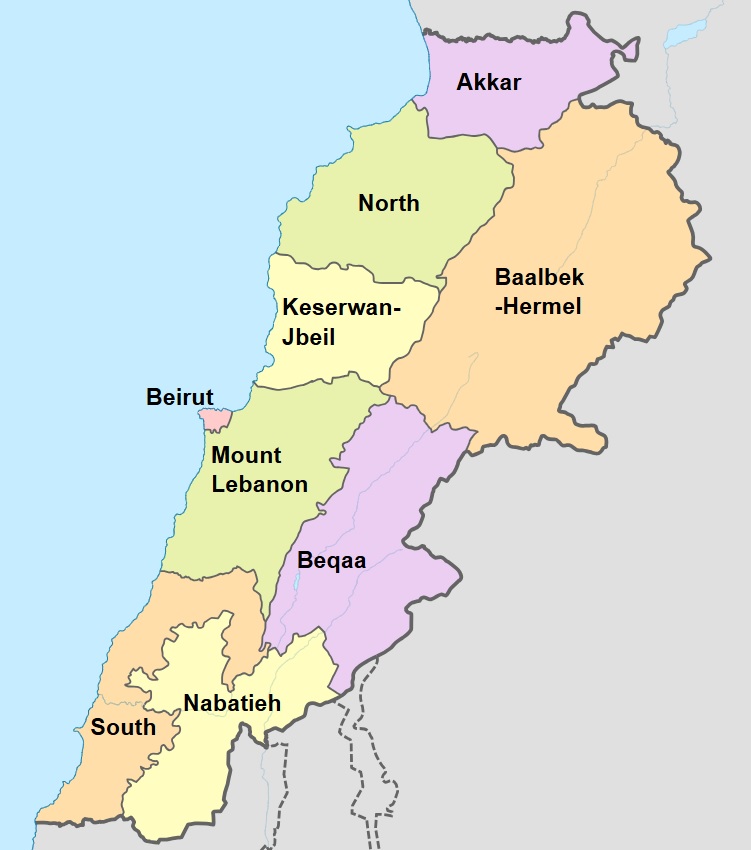
By Anne drew Andrew and Drew – Own work, CC BY-SA 3.0, Link
- Beirut Governorate (Capital: Beirut)
Area: ~18 km² | Population: ~419,000
Lebanon’s economic and financial heart. It drives services, banking, trade, tourism, and administration. - Mount Lebanon Governorate (Capital: Baabda)
Area: ~1,238 km² | Population: ~1,531,000 (largest)
A major population and economic hub with strong contributions to services, industry, real estate, and suburban commerce. - North Governorate (Capital: Tripoli)
Area: ~1,205 km² | Population: ~803,000
Features a historic port and diverse economy including trade, agriculture, and light industry. - South Governorate (Capital: Sidon)
Area: ~943 km² | Population: ~602,000
Key agricultural producer (citrus, bananas, olives) with growing tourism and border-area economic activity.
- Beqaa Governorate (Capital: Zahleh)
Area: ~1,271 km² | Population: ~540,000
Lebanon’s agricultural breadbasket — vital for grains, fruits, vegetables, grapes (wine), and livestock.’ - Akkar Governorate (Capital: Halba)
Area: ~776 km² | Population: ~432,000
Predominantly rural and agricultural, focusing on cereals, potatoes, and vegetables. New airport, Qlayaat Airport.
- Baalbek-Hermel Governorate (Capital: Baalbek)
Area: ~3,009 km² (largest) | Population: ~472,000
Significant for agriculture, tourism (historic Roman ruins), and livestock in the Bekaa region. - Keserwan-Jbeil Governorate (Capital: Jounieh)
Area: ~722 km² | Population: ~300,000
Coastal and mountainous with tourism, historic sites (e.g., Byblos), real estate, and services. - Nabatieh Governorate (Capital: Nabatieh)
Area: ~1,058 km² | Population: ~391,000
Strong in agriculture (olives, tobacco, fruits) and traditional industries.
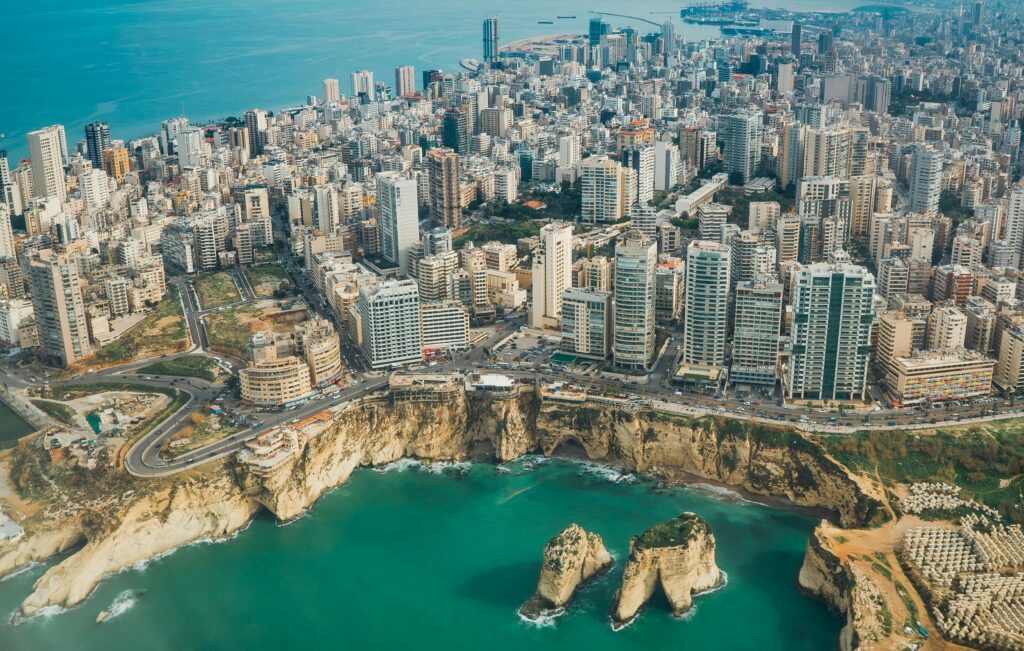
Beirut Governorate. The Vibrant Capital
Best known for: Cosmopolitan energy, food scene, nightlife, and layered history.
Beirut perfectly blends old and new. Often called the “Paris of the Middle East,” it’s ideal for city lovers.
Beirut perfectly blends old and new. Often called the “Paris of the Middle East,” it’s ideal for city lovers.
Top attractions:
- Pigeon Rocks (Raouché) and the scenic Corniche promenade
- National Museum of Beirut
- Downtown Beirut, Zaitunay Bay & Souks
- Hamra Street for cafés and street life
- Gemmayzeh and Mar Mikhael for nightlife and restaurants
- Sursock Museum and contemporary art scene
- The Banque du Liban (BDL) Museum in Hamra.
Mount Lebanon Governorate – Mountains, Palaces & Nature
Best known for: Dramatic landscapes, cedar reserves, and historic palaces.
This governorate is perfect for nature lovers and those seeking cooler mountain air. Focus on Mountains, Palaces & Nature
Top attractions:
- Jeita Grotto (one of the world’s most spectacular caves)
- Beiteddine Palace and Deir el-Qamar
- Shouf Biosphere Reserve (ancient cedar forests and hiking)
- Afqa Grotto and Adonis Valley
- Ski resorts like Faraya and Laqlouq
- Traditional mountain villages such as Aley and Broumana

North Lebanon Governorate – History, Coast & Sacred Valleys
Best known for: Ancient ports, medieval souks, and spiritual mountain retreats.
Top attractions:
- Byblos (Jbeil) – one of the oldest continuously inhabited cities in the world (UNESCO)
- Tripoli’s historic souks and Crusader Castle
- Qadisha Valley (Holy Valley) and the Cedars of God (UNESCO)
- Batroun’s beautiful beaches and old churches
- Anfeh – salt pans, turquoise waters, and charming peninsula
Keserwan-Jbeil Governorate – Coastal Charm Meets Mountain Beauty
Best known for: Picturesque coastal towns, grottoes, and easy access to both sea and mountains.
Top attractions:
- Jounieh Bay and
- Teleferique to Harissa (Our Lady of Lebanon)
- Jeita Grotto
- Charming coastal villages and marinas
- Hiking trails and ancient churches in the mountains
- Casino du Liban – A leading entertainment complex

South Lebanon Governorate – Phoenician Heritage & Golden Beaches
Best known for: UNESCO-listed ancient cities, sandy beaches, and rich Phoenician history.
Top attractions:
- Tyre (Sour) – Roman hippodrome, necropolis & beautiful beaches (UNESCO)
- Sidon (Saida) – Sea Castle, old souks & Echmoun Temple
- Jezzine waterfalls
- Tyre Coast Nature Reserve

Nabatieh Governorate – Culture, Castles & Hilltop Villages
Best known for: Historic fortresses, resistance landmarks, and authentic southern hospitality.
Top attractions:
- Beaufort Castle (one of Lebanon’s most impressive Crusader forts)
- Mleeta Resistance Tourist Landmark
- Traditional villages and scenic hilltop views
- Local markets and cultural experiences

Beqaa Governorate – Roman Ruins & World-Class Wineries
Best known for: Impressive Roman temples, fertile vineyards, and agricultural heritage.
Top attractions:
- Baalbek – home to some of the largest Roman ruins on Earth (UNESCO)
- Anjar Umayyad ruins (UNESCO)
- Famous wineries (Château Ksara and many others)
- Zahle – known for excellent local food and arak
- Aammiq Wetland Nature Reserve

Baalbek-Hermel Governorate – Ancient Wonders & Remote Landscapes
Best known for: Majestic Roman architecture and rugged natural beauty.
Top attractions:
- Baalbek Roman complex
- Hermel Pyramid (Qamouat al-Hermel)
- Scenic highland areas and water sources

Akkar Governorate – Untouched Nature & Authentic Lebanon
Best known for: Wild mountains, quiet villages, and off-the-beaten-path exploration.
Top attractions:
- Akkar mountain trails and forests
- Traditional rural villages
- Rivers, valleys, and peaceful countryside
- Emerging eco-tourism experiences

