 Skip to content


Douma Village – Guide to One of Lebanon’s Most Beautiful Traditional Mountain Towns
Douma is a beautifully preserved traditional village in the Batroun District of northern Lebanon, set in a mountain valley at an elevation of roughly 900–1,200 meters. Known for its red-tiled stone houses, atmospheric old souk, historic churches, and peaceful rural character, Douma has long been regarded as one of the most authentic and attractive villages in the country.
In 2023 it was recognized by the World Tourism Organization among the Best Tourism Villages, a distinction that reflects its successful preservation of architectural heritage, cultural life, and natural surroundings. The village offers visitors a chance to experience the quieter, more traditional side of Lebanese mountain life within easy reach of the coast.
Quick Overview
- Location: Batroun District, North Governorate, Lebanon (approximately 80 km from Beirut)
- Elevation: 900–1,200 m
- Highlights: Traditional red-tiled houses, historic Old Souk, ancient sarcophagus, churches built on earlier temple sites, panoramic mountain views
- Best for: Cultural travelers, heritage lovers, photographers, and those seeking authentic village atmosphere
- Character: Peaceful, well-preserved, and rich in architectural and historical detail
What Makes Douma Village Special
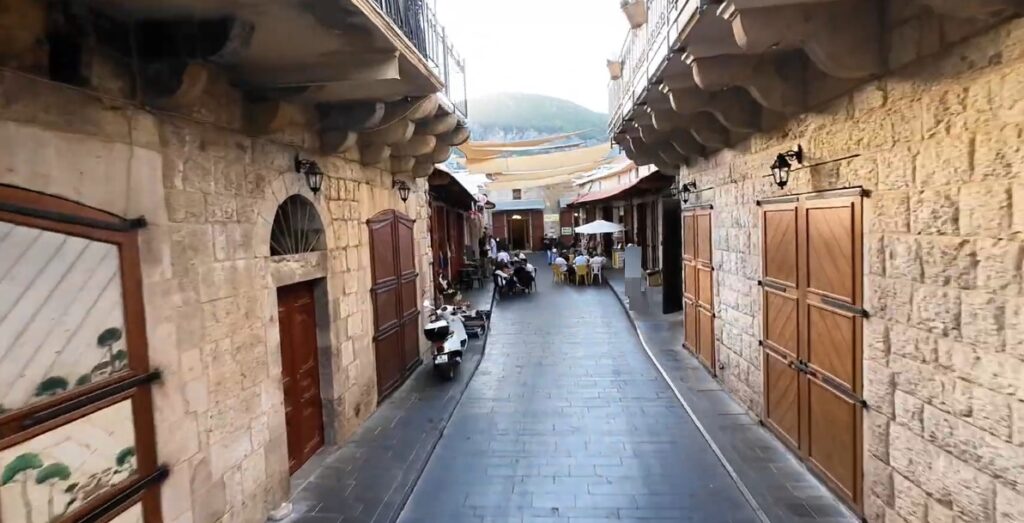
Douma’s name is often linked to ideas of calm or silence, and the village lives up to that reputation. It is especially noted for its large number of traditional Levantine stone houses with characteristic red-tiled roofs—many of them classified as national heritage. Strict building regulations have helped maintain the cohesive historic appearance of the village.
At the heart of Douma lies its Old Souk, a charming traditional market with arcaded shops that once served as an important regional trading point. The village square features a notable 4th-century sarcophagus with a Greek inscription belonging to a priest named Castor (dated to 317 AD). Several of Douma’s churches stand on the remains of earlier pagan temples, illustrating the long continuity of sacred sites in the area.
The village experienced a golden age between the late 19th and early 20th centuries, when remittances from emigrants (particularly in the Americas) funded much of the infrastructure and housing that still defines its character today. Douma was also one of the earlier localities in Mount Lebanon to establish a municipal council.

Exploring the Village
The best way to experience Douma is on foot. Wander the narrow streets lined with traditional houses, explore the Old Souk, visit the main square with the Castor sarcophagus, and step into the historic churches. The overall atmosphere is calm and residential rather than heavily commercialized, giving visitors a genuine sense of everyday mountain-village life.
Local products such as olive oil, apples, jams, and traditional sweets are often available, and small cafés provide pleasant places to pause. In summer the village hosts cultural activities and festivals that add further liveliness.
Practical Information
Douma is a living village rather than a fenced tourist site, so most areas are freely accessible. There is no single entrance fee. Basic services, small shops, cafés, and some guesthouse or hospitality options are available. The ecomuseum (when open) offers insight into the village’s more recent history.
Comfortable walking shoes are recommended for the sloping streets and stone surfaces. The village is compact enough to explore in a few hours, though many visitors prefer to linger or stay overnight.


Best Time to Visit and Tips
Spring and autumn offer ideal temperatures and green landscapes. Summer is pleasantly cooler than the coast and often animated by local events. Winter can be cold, with the possibility of snow at higher elevations.
Tips for visitors:
- Take time to walk the residential streets as well as the souk—the traditional architecture is one of Douma’s greatest strengths.
- Visit the village square to see the 4th-century sarcophagus.
- Support local producers by purchasing olive oil, jams, or other regional products.
- Combine Douma with nearby Bchaaleh (Noah’s Olive Trees) or other Batroun highland sites.
- Respect the residential character of the village and local privacy.
- Consider an overnight stay to experience the quieter evening atmosphere.
How to Get There
Douma lies about 80 km from Beirut in the Batroun mountains (roughly 1.5–2 hours by car). From the coastal highway, exit toward the Batroun highlands and follow signs via routes such as Amchit–Lehfed–Mayfouk or other mountain roads leading inland.
Private car is the most practical option. Once in the area, the village is easy to navigate on foot. Public transport options are limited and usually require connections via Batroun or other larger centers.

Nearby Attractions
Douma sits in a rich highland landscape. Nearby points of interest include the ancient olive trees of Bchaaleh (Noah’s Olive Trees), the Crusader fortress of Smar Jbeil, the sculpture village of Rachana, and the coastal historic town of Batroun with its Phoenician Sea Wall, Old Souk, and harbor. Hiking trails in the wider area connect to other villages and natural sites.
Frequently Asked Questions
Why is Douma special?
It is one of Lebanon’s best-preserved traditional mountain villages, with hundreds of heritage houses, a historic souk, ancient remains, and a strong sense of local identity. It was recognized as one of the World Tourism Organization’s Best Tourism Villages in 2023.
Is there an entrance fee?
No. Douma is a living village open to visitors.
How much time should I spend there?
A focused visit can take 2–3 hours. A half-day or overnight stay allows a more relaxed experience.
What is the Castor sarcophagus?
A 4th-century stone sarcophagus in the village square bearing a Greek inscription for a priest named Castor who died in 317 AD.

Plan Your Visit to Douma Village
Douma offers a rare combination of well-preserved traditional architecture, layered history, and genuine mountain-village atmosphere. Its red-tiled houses, atmospheric souk, ancient sarcophagus, and quiet streets provide a memorable contrast to more heavily visited coastal destinations.
Whether you come for a few hours of heritage walking, to experience local products and cafés, or to use the village as a base for exploring the Batroun highlands, Douma rewards unhurried attention. Arrive with time to wander, respect the residential character of the place, and discover one of northern Lebanon’s most authentic and beautiful traditional villages.


