 Skip to content


Martyrs’ Square, Beirut – The Historic Heart of Lebanon’s Capital
Martyrs’ Square (Arabic: ساحة الشهداء, Sāḥat ash-Shuhadāʾ), also known historically as Al Burj or Place des Cannons, stands at the very center of downtown Beirut. This iconic public square has served for generations as the symbolic and physical heart of the city and of Lebanon itself. It is a place of memory, resilience, political expression, and everyday urban life.
Named in honor of Lebanese and Syrian nationalists executed by Ottoman authorities on 6 May 1916, the square continues to embody the country’s struggles for independence, unity, and freedom. Today it remains one of the most meaningful open spaces in Beirut, surrounded by major landmarks and linked to both the city’s ancient past and its modern aspirations.
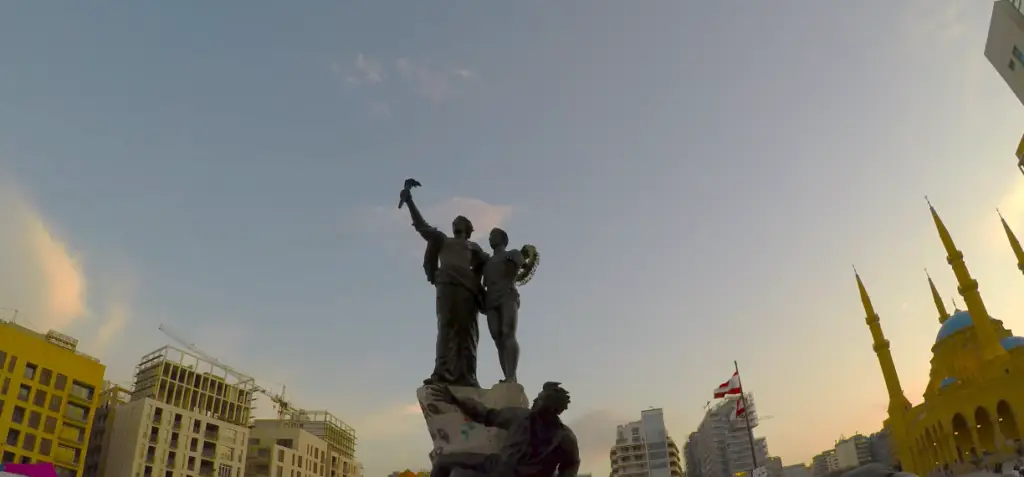
Quick Overview
- Location: Central Downtown Beirut (Beirut Central District)
- Key features: Martyrs’ Monument, open public space, proximity to Mohammad Al-Amin Mosque and other historic sites
- Significance: National symbol of sacrifice, resistance, and public gathering
- Best for: History enthusiasts, photographers, cultural visitors, and anyone seeking to understand Beirut’s layered identity
- Atmosphere: Open urban plaza with deep historical weight and ongoing civic importance
A Square Steeped in History
The area that is now Martyrs’ Square began as an open space outside the old city walls, marked by an ancient watchtower that gave it the early name Sahat al-Burj (Tower Square). Over time it became known as Place des Cannons due to artillery placed there. Under Ottoman rule it carried names such as Hamidiyyeh Square, Union Square, and Freedom Square, reflecting shifting political currents.
The defining moment came on 6 May 1916, when Ottoman military commander Djemal Pasha ordered the public hanging of Lebanese and Syrian nationalists accused of opposing Ottoman rule. In their memory the square was officially renamed Martyrs’ Square in 1931. The first commemorative sculpture, known as “Les Pleureuses” (the weeping women), was installed in 1930. The current bronze Martyrs’ Monument, created by Italian sculptor Marino Mazzacurati, was inaugurated in 1960 by President Fouad Chehab.
During the Lebanese Civil War (1975–1990), the square lay along the Green Line that divided East and West Beirut, suffering heavy damage. After the war it became a focal point of reconstruction. In 2005 it regained national prominence during the Cedar Revolution following the assassination of former Prime Minister Rafik Hariri, whose gravesite lies nearby. In more recent years it has continued to serve as a gathering place for public expression and civic events.

The Martyrs’ Monument
At the center of the square stands the four-meter-high Martyrs’ Monument. The sculpture depicts figures that honor the patriots executed in 1916. After wartime damage, the monument was carefully restored, with the decision made to preserve the bullet marks and scars as a deliberate reminder of the Civil War. This choice gives the statue a powerful dual meaning: it commemorates the early martyrs of independence while also bearing visible testimony to later conflict.
Visitors often pause here to reflect, take photographs, or simply absorb the weight of the site. The monument remains one of the most recognizable symbols of Beirut and of Lebanese national memory.

Surrounding Landmarks and Setting
Martyrs’ Square is framed by several of downtown Beirut’s most important buildings and spaces. On one side rises the Mohammad Al-Amin Mosque with its distinctive blue dome and tall minarets, an architectural landmark completed in the early 2000s. Nearby stand the St. George Maronite Cathedral and other religious and historic structures. The Garden of Forgiveness and the gravesite of Rafik Hariri add further layers of contemporary significance.
The square forms part of a larger urban axis that connects southward toward major avenues and northward toward the sea and port area. Archaeological remains and the broader reconstructed downtown district surround it, creating a dialogue between ancient Tell sites, Ottoman and Mandate-era memory, and modern urban design.
Visiting Martyrs’ Square
The square is an open public space accessible at all times. It functions both as a place of quiet reflection and as a lively urban plaza depending on the day and the events taking place. Visitors can walk freely around the monument, observe the surrounding architecture, and sense the square’s role as a civic stage.
There are no formal tickets or opening hours. The experience is best appreciated on foot, allowing time to take in the monument from different angles and to notice the details of the restored surfaces and the broader cityscape. The site works well as a starting or ending point for exploring downtown Beirut, the nearby souks, waterfront areas, or other cultural attractions.

Practical Information
Martyrs’ Square sits in the heart of the Beirut Central District and is easily reached by taxi, ride-hailing services, or on foot from many central neighborhoods. It is well connected to the rest of the reconstructed downtown area. Facilities such as cafés, restaurants, and shops are available in the immediate surroundings.
The square is generally safe and frequented by both locals and visitors, though standard urban awareness is always advisable. It can host gatherings, commemorations, or events, so the atmosphere may vary.
Best Time to Visit and Tips
The square can be visited year-round. Early morning or late afternoon often provide softer light for photography and a calmer atmosphere. Evenings can feel more animated depending on activity in the surrounding downtown.
Tips for visitors:
- Take time at the Martyrs’ Monument and notice the intentional preservation of war damage.
- Combine your visit with the Mohammad Al-Amin Mosque (check prayer times for visitor access) and nearby historic churches.
- Walk the surrounding streets to appreciate the reconstructed urban fabric and any visible archaeological elements.
- Use the square as a reference point when navigating central Beirut.
- Respect the commemorative nature of the site, especially near the monument and gravesite areas.

Nearby Attractions
Immediately around Martyrs’ Square you will find the Mohammad Al-Amin Mosque, St. George Maronite Cathedral, the Garden of Forgiveness, and the broader Beirut Central District with its restored buildings, shopping areas, and waterfront connections. A short distance away lie the National Museum of Beirut, other cultural institutions, and neighborhoods such as Gemmayzeh or Saifi that offer additional atmosphere, dining, and nightlife.
Frequently Asked Questions
Why is it called Martyrs’ Square?
It commemorates the Lebanese and Syrian nationalists executed by Ottoman authorities on 6 May 1916 in this location.
What is the main monument?
The bronze Martyrs’ Monument by Italian sculptor Marino Mazzacurati, inaugurated in 1960 and later restored with its war scars intentionally left visible.
Is the square open to the public?
Yes. It is an open public space accessible at all times.
How long should I spend there?
Thirty minutes to an hour is enough for the monument and immediate surroundings; longer if combining with nearby sites or simply absorbing the atmosphere.
Plan Your Visit to Martyrs’ Square
Martyrs’ Square is more than a landmark; it is a living symbol of Beirut’s and Lebanon’s complex history of sacrifice, division, resilience, and hope. Standing in this open space, surrounded by the monument, major religious buildings, and the reconstructed city center, visitors gain a tangible sense of the forces that have shaped the capital.
Whether you come for quiet reflection, historical understanding, photography, or as part of a wider exploration of downtown Beirut, Martyrs’ Square offers a profound and memorable encounter with the heart of the city. Take your time, observe the details, and let the layers of history speak.


