 Skip to content


Phoenician Sea Wall, Batroun – Guide to Lebanon’s Ancient Coastal Landmark
The Phoenician Sea Wall (also known simply as the Phoenician Wall) is one of Batroun’s most iconic and enduring landmarks. Stretching along the Mediterranean shoreline in the historic coastal town of Batroun in northern Lebanon, this impressive stone structure is traditionally attributed to the Phoenicians and stands as a powerful reminder of the region’s ancient maritime heritage.
Located right beside the old harbor, the wall has protected the settlement from the force of the sea for centuries. Today it remains freely accessible, offering visitors a chance to walk beside one of Lebanon’s most atmospheric ancient monuments while enjoying open views of the Mediterranean.

Quick Overview
- Location: Batroun waterfront, North Governorate, Lebanon (approximately 50–55 km north of Beirut)
- Type: Ancient sea wall / coastal defense and quarry structure
- Length: Approximately 220–225 meters
- Height: Up to about 5 meters in places
- Highlights: Massive sandstone blocks, dramatic sea views, proximity to the old harbor and historic town
- Best for: History lovers, photographers, coastal walks, and anyone exploring Batroun
- Character: Open-air ancient monument integrated into the living waterfront

What Makes the Phoenician Sea Wall Special
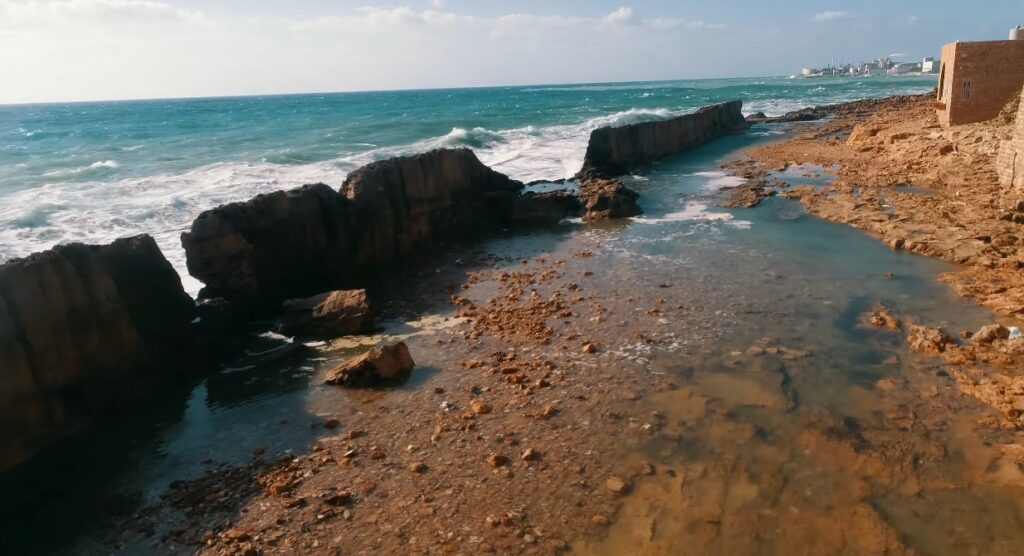
The wall runs along the rocky promontory that forms the western edge of historic Batroun. It was created by cutting into the natural sandstone (locally known as ramleh) of the coastline, effectively turning a quarry into a protective barrier against waves and storms. The resulting structure measures roughly 220–225 meters in length, with a width of 1–2 meters and a maximum height of around 5 meters.
Although commonly called the “Phoenician Wall,” its exact dating has been debated by researchers. It is widely associated with the Phoenician period and later use, and it clearly demonstrates sophisticated understanding of the local geology and the power of the sea. The wall once helped shelter the harbor area and the settlement behind it. In later periods, including Roman times, the site continued to be used, and traces of quarrying remain visible.
Standing beside the wall, visitors can still feel the force of the Mediterranean waves against the ancient stone—an experience that connects the present day directly with Batroun’s deep maritime past.

Visiting the Wall
The Phoenician Sea Wall is completely open and free to visit at any time. A simple walk along or beside the structure is the main experience. The path is easy and offers excellent views of the sea, the old fishing harbor, and the historic town rising behind it.
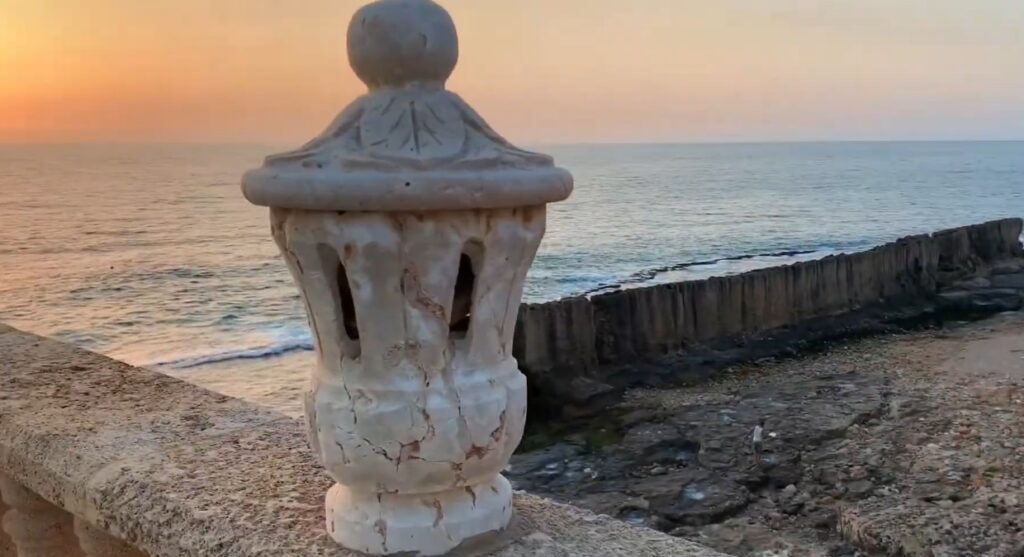
Many people come at sunset, when the light softens and the contrast between the stone, the water, and the sky becomes especially photogenic. The wall sits right next to other attractions, so it naturally forms part of a longer stroll through old Batroun.
Practical Information
There is no entrance fee, ticket office, or restricted opening hours. The site is part of the public waterfront. The surrounding area has cafés, restaurants, and the lively old souk within easy walking distance. The ground near the wall can be uneven or wet from spray, so comfortable shoes are recommended.
The wall is suitable for most visitors, including families, and requires no special physical effort beyond normal walking.
Best Time to Visit and Tips
The wall can be enjoyed year-round. Late spring, summer, and early autumn offer the most pleasant weather for spending time by the sea. Sunset is particularly popular for photography and atmosphere. Winter visits can be dramatic when the sea is rough.
Tips for visitors:
- Combine the wall with a walk through Batroun’s old souk and a visit to St. Stephen’s Cathedral or Our Lady of the Sea Church.
- Visit at sunset for the best light and views.
- Watch your footing near the edge, especially when waves are high.
- Bring a camera—the combination of ancient stone and open sea is highly photogenic.
- Allow 20–40 minutes for the wall itself, or longer if exploring the surrounding historic center.
- Respect the monument and avoid climbing on fragile sections.

How to Get There
Batroun lies about 50–55 km north of Beirut along the coastal highway. The drive typically takes 1–1.5 hours depending on traffic. Once in Batroun, the Phoenician Sea Wall is easy to reach on foot from the old town, the harbor, or the main square. It sits directly on the waterfront beside the historic port area.
Private car, taxi, or bus services along the coastal route all work well. From the main bus drop-off points in Batroun it is a short walk or very quick taxi ride to the wall.

Nearby Attractions
Immediately around the wall you will find the old fishing harbor, the charming old souk with its sandstone vaults and cafés, St. Stephen’s Cathedral, and the small Our Lady of the Sea Church. Further afield in the Batroun area are beaches, the Mseilha Fort, and scenic mountain villages. The combination of sea, history, and lively town atmosphere makes Batroun one of the most enjoyable day-trip or weekend destinations in northern Lebanon.
Frequently Asked Questions
Is the Phoenician Sea Wall free to visit?
Yes. It is an open public monument with no entrance fee.
How long is the wall?
Approximately 220–225 meters.
Is it really Phoenician?
It is traditionally attributed to the Phoenicians and forms part of Batroun’s ancient coastal defenses and quarry works. Exact dating continues to be studied, but its antiquity and importance are undisputed.
Is it suitable for children?
Yes, though young children should be supervised near the water’s edge.


Plan Your Visit to the Phoenician Sea Wall
The Phoenician Sea Wall is more than an archaeological remain—it is a living piece of Batroun’s identity where ancient stone still meets the open Mediterranean. Walking along its length offers both a tangible connection to Lebanon’s Phoenician past and one of the most scenic waterfront experiences on the northern coast.
Whether you come for history, photography, a peaceful seaside stroll, or simply as part of a day exploring Batroun’s old town and harbor, the wall delivers atmosphere and beauty in equal measure. Pair it with the souk, a fresh lemonade, and the surrounding historic streets for a memorable visit to one of Lebanon’s most charming coastal towns.


