 Skip to content


Smar Jbeil Fortress – Guide to the Crusader Castle Above Batroun
Smar Jbeil Fortress (also known as the Castle or Citadel of Smar Jbeil) is a well-preserved medieval stronghold perched on a rocky promontory in the village of Smar Jbeil, in the Batroun District of northern Lebanon. Rising at around 500 meters above sea level, the fortress commands sweeping views of the Mediterranean coast and the surrounding mountains.
Built primarily in the 12th century by the Crusaders as a feudal stronghold within the County of Tripoli (linked to the barony of Boutron/Batroun), the castle stands on a site with evidence of earlier human presence. Its strategic position and dramatic setting make it one of the most rewarding historic sites in the Batroun region.
Quick Overview
- Location: Smar Jbeil village, Batroun District, North Governorate, Lebanon (approximately 50–55 km from Beirut)
- Elevation: Around 500 m
- Type: Medieval Crusader fortress (tower-and-bailey castle)
- Highlights: Rock-cut ditch, curtain walls, towers, panoramic views of the sea and mountains
- Best for: History enthusiasts, photographers, and travelers exploring the Batroun highlands
- Character: Atmospheric hilltop ruins with strong historical presence and outstanding scenery

What Makes Smar Jbeil Fortress Special
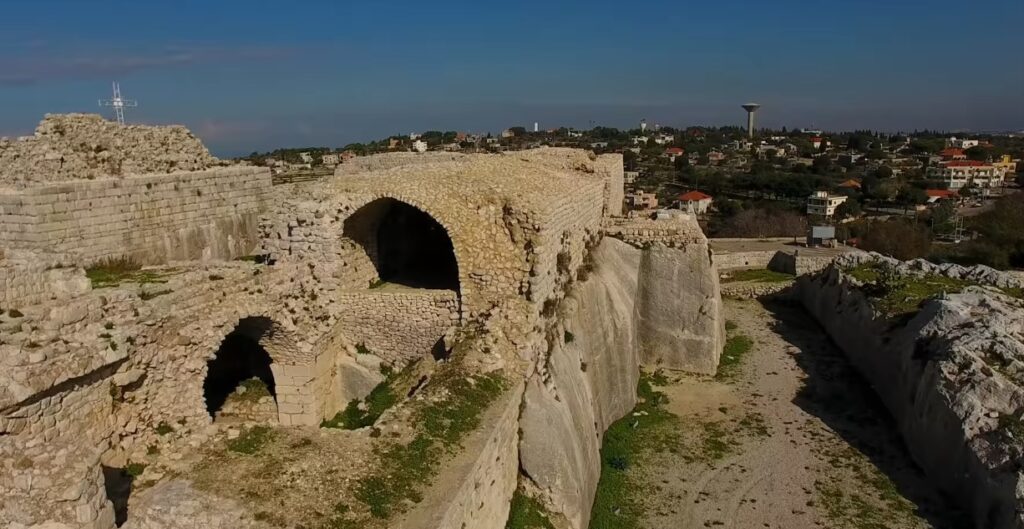
The name Smar Jbeil is widely interpreted as meaning “Guardian of Jbeil” (Byblos), reflecting the site’s strategic role overlooking approaches to the coast. While popular accounts sometimes attribute earlier Phoenician origins to the fortress, archaeological and historical evidence confirms that the visible castle structure was constructed by the Franks in the 12th century in three main building phases.
The fortress is a classic small tower-and-bailey design featuring a rock-cut ditch, curtain walls, four corner towers, additional mid-wall towers, and a barbican protecting the entrance. Its elevated position provided excellent surveillance over the surrounding countryside and coastal routes. Surveys have also revealed traces of earlier occupation, including Bronze Age and Roman-period remains, rock-cut cisterns, and funerary elements in the vicinity.
After the Crusader period the site continued to hold local importance. It suffered major damage in the earthquake of 25 November 1630, which destroyed parts of the donjon, and was subsequently restored. In later centuries it had associations with Maronite religious and administrative functions. Today it is managed by the Lebanese Directorate General of Antiquities as a free public heritage site.


Visiting the Fortress
The castle is open to the public free of charge and can be explored independently. Visitors can walk around the walls, examine the remaining towers and internal spaces, and enjoy the wide panoramic views that stretch from the Mediterranean coastline toward the Mount Lebanon range. The site rewards slow exploration and careful attention to the defensive architecture and the natural setting.
The approach and internal paths can be uneven, so sturdy footwear is recommended. The combination of historic ruins and open views makes the fortress particularly photogenic, especially in the softer light of late afternoon.
Practical Information
There is no entrance fee and no formal ticket office. The site is maintained as an un-ticketed heritage location. Facilities on site are minimal; visitors should come prepared with water and sun protection. The village of Smar Jbeil itself offers additional points of interest, including historic churches, and the wider area includes guesthouses and nearby wineries.
Allow 45–90 minutes for a thorough visit, depending on how much time you spend on the views and photography.

Best Time to Visit and Tips
Spring and autumn provide the most comfortable temperatures and clear views. Summer can be warm but enjoyable with the altitude and breeze. Winter visits are possible, though paths may be slippery after rain.
Tips for visitors:
- Wear sturdy, comfortable shoes for uneven stone surfaces and the rock-cut areas.
- Bring water and sun protection.
- Visit in the late afternoon for the best light and atmosphere.
- Combine the fortress with a walk through Smar Jbeil village and its churches.
- Pair the visit with Batroun’s coastal historic sites or nearby cultural stops such as Rachana for a fuller day.
- Respect the ruins and any barriers; the site is a protected heritage monument.
How to Get There
Smar Jbeil lies in the hills above the Batroun coast, roughly 50–55 km north of Beirut (about 1.5 hours by car). From the coastal highway, exit toward Batroun or follow signs inland via Madfoun or other local routes climbing into the hills. The fortress is located at the western side of the village on a prominent rocky spur.
Private car is the most practical option. Once in the Batroun area, the drive up to Smar Jbeil is relatively short. Local directions or navigation apps help with the final approach.

Nearby Attractions
Within Smar Jbeil itself you will find historic churches, including Saint Nohra Church. The surrounding Batroun District offers the coastal town of Batroun (Phoenician Sea Wall, Old Souk, churches, and harbor), the sculpture heritage of Rachana (including the Basbous Museum), boutique wineries, and scenic mountain roads. The combination of hilltop fortress and coastal historic town makes for an excellent full-day itinerary.
Frequently Asked Questions
Is Smar Jbeil Fortress free to visit?
Yes. It is an open public heritage site with no admission fee.
When was the castle built?
The main visible structure dates to the 12th century and was built by the Crusaders. The site shows evidence of earlier occupation.
What are the views like?
Excellent. From the fortress you can see the Mediterranean coastline and parts of the Mount Lebanon range.
Is the site suitable for children or less mobile visitors?
The terrain includes uneven stone surfaces and some elevation changes. Reasonable mobility and careful footing are needed.


Plan Your Visit to Smar Jbeil Fortress
Smar Jbeil Fortress stands as a compelling example of Crusader military architecture in a spectacular natural setting. Its rock-cut defenses, remaining towers, and commanding views offer both historical insight and a strong sense of place in the Batroun highlands.
Whether you come for the medieval architecture, the panoramic scenery, or as part of a wider exploration of the region’s heritage, the fortress rewards the journey into the hills. Combine it with time in the village and a visit to Batroun’s coastal historic sites for a rich and memorable experience of northern Lebanon’s layered past. Arrive with good shoes, allow time to enjoy the views, and discover one of the area’s most atmospheric strongholds.


