 Skip to content


St. Stephen’s Cathedral (Mar Estephan), Batroun – Guide to the Landmark Maronite Church
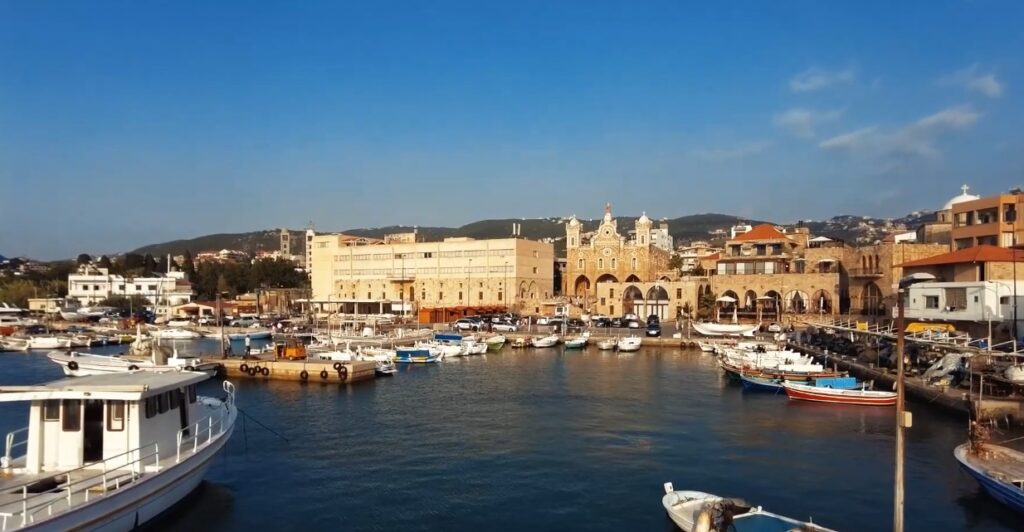
St. Stephen’s Cathedral (also known as Mar Estephan, Mar Estephanos, or Cathédrale Saint-Étienne) is the principal Maronite cathedral of Batroun in northern Lebanon. Overlooking the town’s historic fishing harbor, this large and striking church is one of the most prominent religious and architectural landmarks on the Lebanese coast.
Completed in 1910 on the site of an earlier church (believed by some to have Crusader origins), the cathedral was designed by the Italian architect Giuseppe Maggiore. Built primarily from local Batroun sandstone, it combines neo-Byzantine, Romanesque, and Gothic influences and remains an active place of worship as well as a popular stop for visitors exploring the historic center of Batroun.
Quick Overview
- Location: Historic center of Batroun, overlooking the fishing port, North Governorate, Lebanon
- Denomination: Maronite Catholic (Cathedral of the Maronite Diocese of Batroun)
- Built: 1910 (on the site of an older church)
- Architect: Giuseppe Maggiore (Italian)
- Highlights: Impressive sandstone façade, harbor views, interior columns, painting of St. Stephen
- Best for: Architecture and history enthusiasts, cultural visitors, and those exploring Batroun’s old town
- Character: Grand yet welcoming coastal cathedral with strong local identity

What Makes St. Stephen’s Cathedral Special
The cathedral stands out for its size, its elevated position above the port, and its hybrid architectural style. The western façade, facing the sea, features domes and a statue of St. Stephen, creating a distinctive silhouette against the Mediterranean backdrop. Inside, the basilical plan includes a main nave and side sections, three altars, and notable marble columns said to originate from the ancient Temple of Astarte at Deir el-Qalaa in Beit Mery.
Above the central altar hangs a painting of St. Stephen by the Italian artist Giosti. The building also contains the episcopal chair, a pulpit, and a domed baptismal font. Constructed during a period of growth for Batroun, the cathedral reflects both local craftsmanship (using the characteristic golden sandstone of the region) and European architectural influences of the early 20th century.
Its location makes it inseparable from the surrounding historic fabric—the Old Souk, the Phoenician Sea Wall, and the harbor all lie within a short walk.


Visiting the Cathedral
St. Stephen’s Cathedral is an active place of worship and generally open to respectful visitors outside of service times. The exterior can be admired at any time, especially from the harbor side where the façade and statue are most visible. Inside, visitors can appreciate the scale of the interior, the columns, the altars, and the overall atmosphere of the space.
Photography is usually permitted, though discretion is appreciated, particularly during religious services. The cathedral is easily combined with a walk through the Old Souk and a visit to the nearby Phoenician Sea Wall and Our Lady of the Sea chapel.

Practical Information
Opening hours follow the schedule of an active parish church and may vary; mornings and late afternoons are often good times to visit. Modest dress is expected (shoulders and knees covered). The cathedral is located in the walkable historic center of Batroun, close to cafés, shops, and other landmarks.
Best Time to Visit and Tips
The cathedral can be visited year-round. Late afternoon light is particularly attractive for exterior photographs, especially when the sun illuminates the sandstone façade and the port below. Sundays and religious feast days are more active with services and local worshippers.
Tips for visitors:
- Dress modestly out of respect for the religious nature of the site.
- Combine the visit with the Old Souk, Phoenician Sea Wall, and harbor for a complete historic Batroun experience.
- Take time to view the cathedral from the waterfront for the best overall perspective.
- Check locally if you wish to attend a service or confirm interior access times.
- Allow 20–40 minutes for a visit, longer if attending a liturgy or exploring the surroundings in depth.

How to Get There
Batroun lies approximately 50–55 km north of Beirut along the coastal highway (about 1–1.5 hours by car). Once in the town, St. Stephen’s Cathedral is centrally located near the old harbor and is easily reached on foot from the main square, the Old Souk, or the Phoenician Sea Wall.
Private car, taxi, or bus services along the coastal route all provide convenient access. Parking is available in the town center, after which the historic area is best explored on foot.
Nearby Attractions
Immediately around the cathedral you will find the Old Souk, the Phoenician Sea Wall, the historic fishing harbor, and the small chapel of Our Lady of the Sea (Saydet el-Bahr). A short distance away are other churches, including the Greek Orthodox Church of St. George, as well as Batroun’s beaches, restaurants, and the wider attractions of the Batroun District such as Mseilha Fort.

Frequently Asked Questions
Is St. Stephen’s Cathedral free to visit?
Yes. There is no entrance fee.
When was it built?
The present cathedral was completed in 1910 on the site of an older church.
Who designed it?
The Italian architect Giuseppe Maggiore.
Is it still an active church?
Yes. It is the Maronite cathedral of Batroun and holds regular services.
Plan Your Visit to St. Stephen’s Cathedral
St. Stephen’s Cathedral (Mar Estephan) is one of the defining landmarks of Batroun—a handsome sandstone church that watches over the historic harbor and anchors the spiritual life of the town. Its blend of architectural styles, interior details, and superb location make it a rewarding stop for anyone exploring the cultural and historic side of this northern coastal destination.
Whether you come to admire the architecture, to sit quietly inside, or simply to include it in a walking tour of the Old Souk and Phoenician Sea Wall, the cathedral adds depth and beauty to a visit to Batroun. Approach with respect, enjoy the views over the port, and let it form part of a memorable day on Lebanon’s northern coast.


