Skip to content


Citadel of Raymond de Saint-Gilles – Guide to Tripoli’s Historic Hilltop Fortress
The Citadel of Raymond de Saint-Gilles (also known as Qala’at Sanjil, Qala’at Tarablus, or the Citadel of Tripoli) is the dominant historic fortress overlooking the city of Tripoli in northern Lebanon. Perched on a strategic hill above the old city and the Abou Ali River, this large citadel offers both a rich architectural history and some of the best panoramic views in the area.
Originally founded in the early 12th century during the Crusader siege of Tripoli, the fortress has been rebuilt and modified over the centuries by Mamluk and Ottoman rulers. Today it stands as one of Tripoli’s most important landmarks and a key stop for anyone exploring the city’s historic core.

Quick Overview
- Location: Hilltop above the Old City of Tripoli, North Governorate, Lebanon
- Type: Historic fortress / citadel
- Founded: Early 12th century (Crusader period)
- Highlights: Impressive fortified entrance, ramparts with panoramic views, internal courtyards and passages, on-site museum
- Best for: History enthusiasts, architecture lovers, photographers, and visitors combining it with the Old Souks
- Character: Large, layered, and commanding, with strong visual presence over the city
What Makes the Citadel Special
The citadel takes its common name from Raymond de Saint-Gilles (Raymond IV of Toulouse), the Crusader leader who established a fortress here around 1103–1104 during the prolonged siege of Tripoli. He called it the Castle of Mount Pilgrim (Mont Pèlerin). The site had earlier significance, including as part of a Fatimid-era cemetery; traces of an octagonal mashhad (mausoleum) remain.
After the Mamluks captured Tripoli in 1289, the Crusader structure was damaged and later rebuilt. Further major work occurred under the Ottomans, including restorations in the 16th century and extensive rebuilding in the early 19th century under Governor Mustafa Agha Barbar. As a result, the present fortress displays a complex layering of Crusader, Mamluk, and Ottoman architectural features.
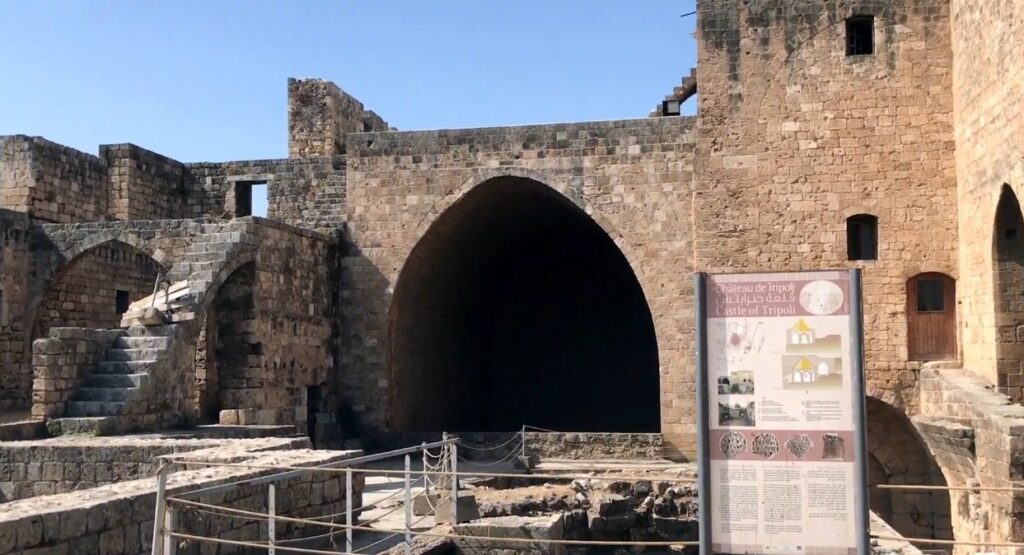
One of the most striking elements is the monumental entrance sequence, which incorporates successive gateways from different periods and a defensive approach. Inside, visitors can explore courtyards, halls, towers, passages, and the ramparts. A small museum (associated with the North Lebanon & Akkar Museum) provides additional historical context and displays.
The elevated position gives excellent views across the old city, the river, and toward the Mediterranean on clear days.


Visiting the Citadel
The citadel is open to visitors and can be explored largely on foot. Expect a mix of open courtyards, stone staircases, vaulted spaces, and stretches of rampart walkways. The site is substantial, so allow time to move between different levels and viewpoints.
Information panels help orient visitors, and the museum component adds depth. Some areas may have restricted access depending on current use or conservation needs. The combination of military architecture and elevated perspectives makes the visit rewarding both historically and visually.
Practical Information
An entrance fee is normally charged (typically a modest amount for foreign visitors, payable in cash). Opening hours are generally daytime, often around 9:00–17:00, though these can vary by season and local conditions. It is wise to confirm current hours and fees on the day of your visit.
The terrain includes stairs and uneven surfaces, so sturdy, comfortable shoes are essential. Facilities are basic. Part of the wider site has at times been associated with military presence, which is normal for such historic fortifications in the region.


Best Time to Visit and Tips
Spring and autumn offer the most comfortable temperatures for walking the exposed ramparts. Morning visits are often cooler and quieter. Late afternoon light can be attractive for photography and views.
Tips for visitors:
- Wear good walking shoes and bring water, especially in warmer months.
- Allow 1.5–3 hours for a thorough visit.
- Combine the citadel with the nearby Old Souks for a full historic half-day or day in Tripoli.
- Climb to the higher ramparts for the best panoramic views over the city.
- Visit the small museum for additional context on the region’s history.
- Check current opening times and any access notes before you go.
- Modest dress and respectful behavior are appropriate at this major heritage site.
How to Get There
The citadel stands on a hill in central Tripoli, a short distance above the Old Souks and the inland historic core. It is easily reached on foot from the souks area (approximately 10–20 minutes depending on starting point and pace) or by a brief taxi ride from other parts of the city.
Tripoli itself is about 80–85 km north of Beirut (roughly 1.5–2 hours by car or bus). Once in Tripoli, ask for the Citadel, Qala’at Sanjil, or Qala’at Tarablus; local drivers and residents know it well.


Nearby Attractions
The citadel is ideally paired with the Old Souks of Tripoli, which lie just below and contain Mamluk-era markets, khans (including the famous Soap Khan), mosques, and hammams. The Mansouri Great Mosque is also close. A short distance away, the coastal district of El-Mina offers a different atmosphere with its harbor and corniche. Together these sites provide a rich introduction to Tripoli’s layered history.
Frequently Asked Questions
Is there an entrance fee?
Yes, a modest fee is generally charged. Confirm the current amount on site.
How long does a visit take?
Most visitors spend 1.5 to 3 hours exploring the fortress and enjoying the views.
Are the views good?
Yes. The ramparts offer wide panoramas over the old city, the river, and surrounding areas.
Is the citadel difficult to walk around?
There are stairs and uneven historic surfaces. Reasonable mobility and good shoes are recommended.
Plan Your Visit to the Citadel of Raymond de Saint-Gilles
The Citadel of Raymond de Saint-Gilles stands as one of the defining historic landmarks of Tripoli. Its elevated position, layered architecture spanning Crusader, Mamluk, and Ottoman periods, and sweeping views make it an essential stop for anyone exploring northern Lebanon’s heritage.
Climb the approaches, walk the ramparts, explore the internal spaces, and take in the prospect over the old city and beyond. Pair the visit with the atmospheric Old Souks below for a memorable and complementary experience of Tripoli’s rich past. Check practical details before you go, wear comfortable shoes, and allow enough time to appreciate both the fortress itself and the city it has overlooked for centuries.