 Skip to content


Souk al-Haraj – Guide to Tripoli’s Unique Covered Mamluk Market
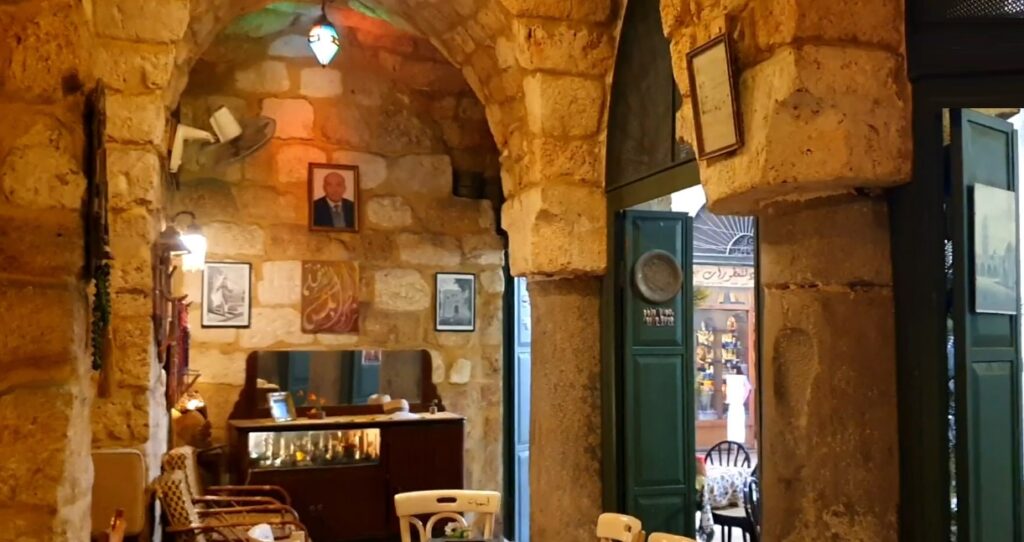
Souk al-Haraj (also spelled Souq al-Haraj or Souk Haraj) is one of the most architecturally distinctive historic markets in Tripoli’s Old City. Located in the northern part of the medina, in the Bab al-Hadid / Hadeed area, this covered 14th-century Mamluk bazaar stands out for its high vaulted ceiling supported by granite columns and its unusual spatial design.
Often described as the only fully covered souk of its kind in Tripoli, it continues to function as a working market while preserving a powerful sense of medieval commercial architecture. The name “Haraj” is commonly linked to the idea of auction or negotiation, reflecting its historic role as a place of trade.

Quick Overview
- Location: Old City of Tripoli (northern section, near Bab al-Hadid), North Governorate, Lebanon
- Type: Historic covered market / Mamluk bazaar
- Period: Mid-14th century (Mamluk)
- Highlights: High vaulted ceiling, 14 granite columns, covered central space, traditional trade atmosphere
- Best for: Architecture enthusiasts, cultural travelers, and those exploring Tripoli’s Old Souks in depth
- Character: Atmospheric, historic, and still commercially active

What Makes Souk al-Haraj Special
Souk al-Haraj is widely regarded as one of the most remarkable commercial buildings of Mamluk Tripoli. Its high vaulted ceiling rises approximately eight meters and is supported by a series of granite columns—traditionally counted as fourteen, with two standing prominently in the central space and others ranged along the sides. These columns are often attributed to earlier Roman, Byzantine, or Crusader structures that were reused in the Mamluk construction.
The building has a roughly square plan with four entrances opening in different directions, creating a distinctive covered yard rather than a conventional open-courtyard khan. Historians note that it may occupy the site of an earlier Crusader church, with some architectural elements incorporated into the later structure. It is said to have been established as a waqf (endowment) in the mid-14th century.
Today the souk is primarily associated with the sale of bedding and related goods—mattresses, pillows, mats, and similar items—along with other traditional and everyday products. The combination of monumental architecture and ongoing commercial use gives the space a rare authenticity.
The building underwent significant restoration in the early 2000s (with German support), which helped stabilize and enhance the structure after earlier damage.


Visiting Souk al-Haraj
The souk is freely accessible as part of the public market network of Tripoli’s Old City. Visitors can enter through any of its gates and walk through the covered central space, observing the soaring vaults, the granite columns, and the surrounding shops. The light filtering through the high ceiling and the contrast between the historic structure and contemporary trade create a memorable atmosphere.
It is best experienced as part of a wider walk through the Old Souks. Nearby lanes lead to other specialized markets, khans, and monuments, so Souk al-Haraj naturally forms one stop within a larger exploration of the medina.
Practical Information
There is no entrance fee. The souk operates as a working market during typical daytime commercial hours. Surfaces may be uneven, and the space can be busy with local shoppers and traders. Comfortable shoes and a respectful approach to the working environment are recommended. Cash is the usual form of payment in the shops.
Best Time to Visit and Tips
The souk can be visited year-round during market hours. Mornings or late afternoons tend to be more comfortable and atmospheric. Fridays and religious holidays may see reduced activity in some shops.
Tips for visitors:
- Look up to appreciate the full height of the vaults and the arrangement of the granite columns.
- Combine the visit with nearby sites such as Khan al-Saboun, other specialized souks, and the broader Old City network.
- Approach the space as both a historic monument and a living market.
- Photography of the architecture is generally fine; ask permission before photographing people or shop interiors.
- Allow time to wander the surrounding lanes rather than treating Souk al-Haraj as an isolated stop.
- A local guide can help place the building in the wider context of Mamluk Tripoli.


How to Get There
Souk al-Haraj lies within Tripoli’s Old City, in the northern section of the historic market quarter. It is reached on foot while exploring the souks. From the central areas near the Mansouri Great Mosque or the main souk lanes, follow directions toward the northern end of the old town / Bab al-Hadid area (local people can point the way).
Tripoli itself is approximately 80–85 km north of Beirut (about 1.5–2 hours by car or bus). Once in the Old City, the souks form a compact, walkable network.
Nearby Attractions
Souk al-Haraj sits within the dense historic fabric of Tripoli’s medina. Close by are other specialized souks, Khan al-Saboun (the Soap Khan), additional khans, historic hammams, and mosques. The Citadel of Raymond de Saint-Gilles rises above the old city and pairs well with a souks visit. The coastal district of El-Mina offers a contrasting harbor atmosphere a short distance away.
Frequently Asked Questions
Is Souk al-Haraj free to enter?
Yes. It is a public historic market.
What is sold there today?
The souk is particularly known for mattresses, pillows, mats, and related household goods, alongside other traditional and everyday items.
Why is the architecture special?
Its high vaulted ceiling supported by reused granite columns and its covered central plan make it one of the most distinctive Mamluk commercial buildings in Tripoli.
How long should I spend there?
15–30 minutes is enough to appreciate the architecture, though it forms part of a longer exploration of the Old Souks.
Plan Your Visit to Souk al-Haraj
Souk al-Haraj offers a concentrated encounter with the architectural and commercial heritage of Mamluk Tripoli. Its soaring vaults, ancient granite columns, and continued use as a working market create a powerful sense of continuity between the 14th century and the present.
Include it in your walk through the Old Souks, pause to take in the scale and craftsmanship of the covered space, and continue onward to neighboring lanes and monuments. For travelers interested in authentic historic markets and layered urban architecture, Souk al-Haraj is one of the most rewarding individual stops in Tripoli’s old city.


